
Technology: passing fad or lasting advantage to seize?
Hi, it’s Lucien. Technology is neither a trend to follow blindly nor an automatic advantage: choose tools that meet a genuine need, then measure their impact. Connected devices can improve comfort, productivity, and energy consumption. But they also raise questions about security, privacy, and sustainability. In my article, I’ll offer you a simple method for identifying trends worth investing in.
Put this into practice now:
- Identify a specific task that takes too much time or costs too much.
- Make sure the technology you choose directly addresses this problem.
- Test a solution on a small scale before rolling it out more widely.
- Assess the costs, benefits, and maintenance requirements.
- Check the security settings and the data being collected.
A tool becomes a competitive advantage when it creates measurable value without adding unnecessary complexity. To explore the topic further, see these tips on technology as a competitive lever and this guide to making cybersecurity an asset.
Technology and connected devices: a lasting trend?
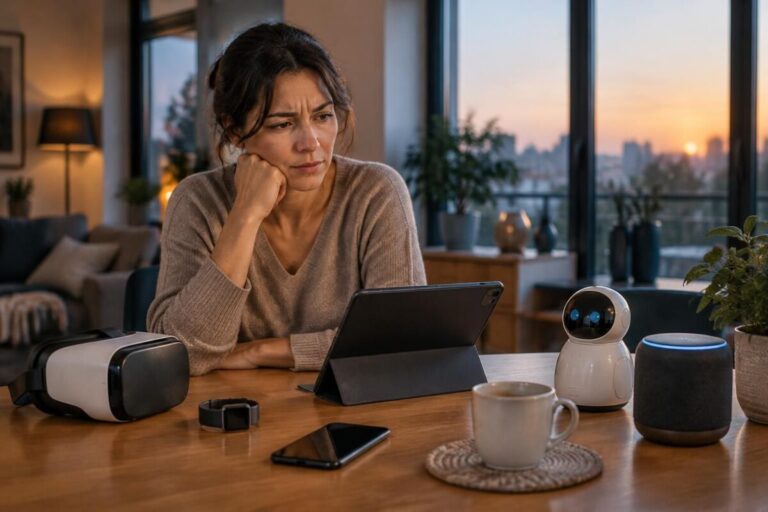
Connected devices, or IoT, exchange data using sensors, software, and a network connection. They can be found in thermostats, health watches, cars, and professional equipment.
Their adoption alone is not enough to prove their usefulness. An innovation deserves a place when it delivers a tangible benefit, fits into existing habits, and remains reliable over time. That’s what distinguishes lasting digital transformation from a mere novelty effect.
Real benefits, provided you target the right things
A smart thermostat can adjust the heating according to household schedules and habits. Depending on the home, climate, and model, energy savings can vary considerably, so it’s important to check the results rather than rely on a general promise.
In a small business, a temperature sensor can flag a malfunction before it brings a production line to a halt. The benefit comes from reducing interruptions, not from the equipment being connected.
Voice assistants and smartwatches also show how these tools can simplify everyday tasks. But convenience only has value if the technology is easy to use, under control, and genuinely useful.
Passing fad or lasting advantage: criteria to check
A lasting technology meets a need that won’t disappear with the next change in trends. It adapts to the tools already in use and offers a reasonable total cost, including updates, maintenance, and replacement.
By contrast, a device that is quickly abandoned, difficult to secure, or lacking a useful function risks becoming a wasted expense. A long-term strategy therefore starts with a simple question: what concrete problem will this tool solve?
| Solution | Potential value | Point to consider |
|---|---|---|
| Connected thermostat | Comfort and better heating management | Compatibility, installation, and variable savings |
| Smartwatch | Activity tracking and useful reminders | Battery life, health data, and dependence on a phone |
| Voice assistant | Simple controls and home automation | Privacy and access to devices |
| Professional sensor | Fast alerts and equipment monitoring | Network quality and maintenance |
A fictional shopkeeper, Karim, was unsure whether to connect his refrigerators. He started with a single sensor and discovered a door that hadn’t been closed properly before any goods were lost. This limited test gave him a concrete basis for deciding whether to expand the system.
“The right technology is the one that solves one problem without creating three more.” This rule helps distinguish value creation from a purchase motivated solely by the novelty effect.
The risks of connected devices for a business
Every device connected to the network can become an entry point for an attack. Weak passwords, outdated software, and default settings increase the risks, especially when several tools communicate with one another.
Data collection also requires vigilance. Before buying, check what information is recorded, who can access it, and how long it is kept. Data security and respect for privacy should be part of the decision, not an afterthought once the device is installed.
Obsolescence is another concern: some manufacturers stop providing updates or make their devices incompatible with new services. Sustainability then depends as much on the length of support as on the quality of the hardware.
Choose useful technology in three steps
- Step 1 — Define the need: note the problem, the people affected, and the expected outcome. Don’t start with a trendy product.
- Step 2 — Run a limited test: try the solution on one task or piece of equipment. Set a trial period of a few weeks, depending on the context, and track time saved, costs, and incidents.
- Step 3 — Decide based on the results: continue if the benefits are clear and the risks are under control. Otherwise, adjust the settings or stop using the tool.
If your business is losing time on repetitive tasks, test a connected or automated tool on a specific process. If your main concern is sensitive data, start by strengthening access controls and security policies before adding new devices.
This method encourages adaptability: you move forward through measured trials rather than rushed purchases. It also protects your investment if the technology evolves faster than expected.
What is shaping the future of connected technology
Artificial intelligence and fast mobile networks make more responsive analysis and more autonomous devices possible. In agriculture, sensors can help adjust irrigation; in healthcare, wearable devices can support daily monitoring without replacing the advice of a professional.
These uses can contribute to a lasting advantage, but their success depends on reliability, security, and user acceptance. For an organization, the goal isn’t to adopt every trend: it’s to select those that genuinely strengthen its operations.
Technology becomes a force when it serves a clear strategy. A modest test, success criteria, and constant attention to risks provide a solid foundation for deciding what to do next.
Frequently asked questions about technology and lasting trends
How can you recognize a technology that will last?
Check that it meets a stable need, delivers measurable value, receives updates, and integrates with the tools already in use.
Do connected devices always reduce energy consumption?
No. Some tools can help manage energy better, but the results depend on the model, the home, the settings, and people’s habits.
Should you connect all the equipment in your business?
No. Start with a specific need and a limited trial. Expand usage only if the benefits are clear and the risks are under control.
What is the main risk of connected devices?
Data security and privacy are major concerns. Use strong passwords, install updates, and limit access to what is necessary.
Thank you for your attention. Best wishes; Lucien P.S. If you could leave me a comment, I’d be delighted…